
Creek bank erosion control Alameda Services
What to Know About Creek bank erosion control Alameda
Creek bank erosion control Alameda Creek bank erosion often starts quietly: a small slump after a storm, exposed roots, or cloudy runoff where soil is washing into the channel. In the Alameda area, seasonal rain, tidal influence, older drainage patterns, and highly variable soils can all make a creek bank more vulnerable. Addressing the problem early is usually safer, cleaner, and less disruptive than waiting for a larger failure.
Why creek bank erosion needs a site-specific plan
Effective Creek bank erosion control Alameda work is not a one-size-fits-all repair. A stable solution depends on the bank height, slope angle, soil type, water velocity, vegetation, and how runoff reaches the creek. The right approach should reduce soil loss without simply pushing the force of water downstream or creating a maintenance problem for a neighboring property.
A professional evaluation may include checking for undercutting at the toe of the bank, cracks along the top edge, failing drainage outlets, and areas where foot traffic or vehicles are adding pressure. For commercial sites, parks, public access areas, HOAs, and private parcels, the goal is the same: protect the bank, control sediment, and keep people and nearby improvements out of harm’s way.
Common solutions used along local creek banks
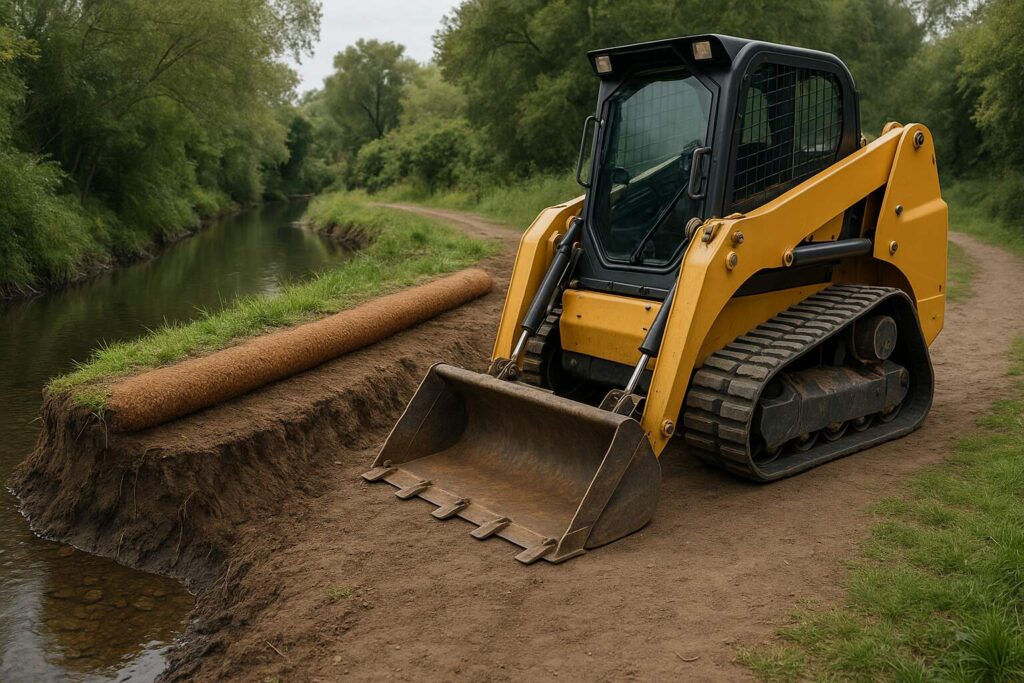
Depending on the site, erosion control crews may use a combination of grading, compacted soil lifts, coir logs, fiber rolls, erosion-control blankets, native planting, live staking, rock toe protection, or engineered retaining systems. On steeper banks or hillside approaches, a compact excavating machine may be used to shape the slope carefully, place materials, and create a more stable profile without unnecessary disturbance.
Bioengineered options are often useful where appearance and habitat value matter. Deep-rooted native plants can help hold soil over time, while temporary blankets and wattles protect the surface until vegetation is established. In higher-energy locations, rock or structural reinforcement may be needed at the base of the bank to resist scour during heavy flows.
Permits, timing, and access matter
Work near creeks may require coordination with local, county, regional, or state agencies, especially when vegetation, wetlands, channel shape, or water quality could be affected. Dry-season scheduling, sediment barriers, careful staging, and equipment access planning are important parts of a responsible job. These steps help keep soil out of the water and reduce delays once work begins.
If you manage land next to a creek, watch for leaning fences, widening cracks, exposed utility lines, sudden drops in the bank, or muddy water after moderate rain. Take photos, keep heavy equipment and traffic away from the edge, and ask an erosion control professional to review the site. A practical plan can help protect safety, preserve usable land, and keep Alameda-area creek banks performing through future storm seasons.
Learn more on our website home page, and see additional guidance from USGS landslide hazard resources.
Creek bank erosion control Alameda is worth looking at based on your goals, budget, timing, and the kind of service or product you actually need.
Creek bank erosion control Alameda is worth comparing carefully before you choose the right provider, service, or product.
For more helpful reading, see our Creek bank erosion control Alameda article guide.
Ready to take the next step? Request your free consultation on our estimate page and see how Erosion Control Alameda can help to find the perfect solution for your needs.