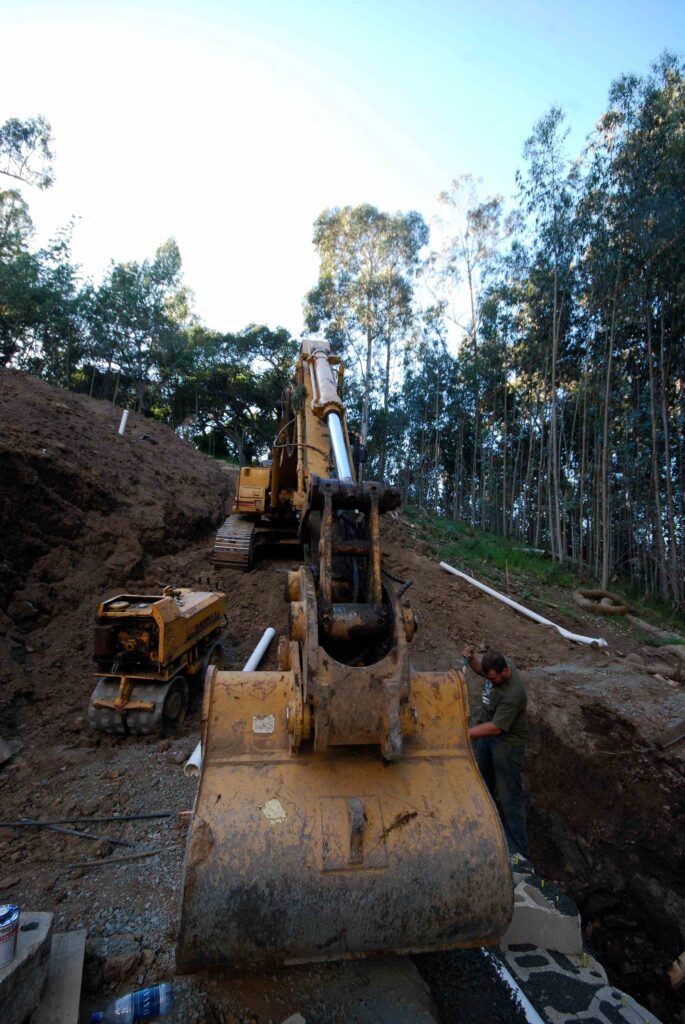
retaining wall construction Alameda Retaining wall construction in Alameda often starts long before the wall itself goes in. On a steep hillside, the first real work is excavation, access, grading, and figuring out how water is going to move through the slope. The featured project shows the kind of site that needs careful planning: a tight hillside cut, heavy equipment working on uneven ground, a prepared base area, and drainage work being installed before the finished wall is built. That is the right order. If the ground is not handled correctly at the start, the wall can lean, settle, crack, or fail when the next wet season hits.
Alameda, CA has a mix of flat lots, older properties, shoreline soils, and hillside or sloped areas where erosion and drainage problems can show up quickly. Even a small slide or washed-out bank can put pressure on fences, patios, driveways, foundations, and access roads. A retaining wall is not just a vertical barrier. It is part of a larger slope repair system. The excavation has to remove loose material, expose stable soil, create room for a footing or base, and make space for gravel, drain pipe, filter fabric, and backfill. Every layer matters because hillside soil is always being pushed by gravity and water.
Why hillside excavation has to come first
On a steep slope, you cannot build a solid wall on loose, wet, or disturbed dirt and expect it to hold. The first step is usually clearing debris, cutting back unstable soil, and shaping a safe working bench for equipment and crews. This can be slow work because an excavator may have limited room to turn, load, or track across the slope. In some Alameda sites, access is narrow and the operator has to stage material carefully so the hill is not overloaded. Removing too much soil at one time can make the slope move. Removing too little can leave weak material behind the wall. Good excavation means knowing where to cut, where to leave support, and how to keep the work area safe while the wall base is prepared.
The risk with unstable hillsides is that movement is not always dramatic at first. A small crack at the top of a slope, a leaning fence post, soft soil near a drain outlet, or mud collecting after rain can be early warning signs. Once water gets into the wrong place, it adds weight and pressure behind the wall area. That pressure can push against concrete, block, timber, or soldier pile systems. It can also cause the soil under the base to soften. This is why landslide repair and retaining wall work usually go together. The wall holds back the soil, but the excavation, drainage, and backfill control the forces acting on it.
Base prep and drainage are not optional details
The base or footing is where many retaining wall problems are either prevented or created. For segmental block walls, the base needs to be cut to the right depth, compacted, leveled, and built with the proper aggregate. For concrete or reinforced walls, the footing area must be excavated to plan and checked for stable bearing soil. If the base is soft, uneven, or full of organic material, the wall can settle in sections. That settling may not show on day one, but it can show after a season of rain, drying, and soil movement. In the image, the open hillside cut and base preparation are the real foundation of the job, even if they are not the part people notice later.
Drainage pipe installation is just as important. A retaining wall should never be asked to hold back trapped water. A perforated drain pipe, clean gravel, filter fabric, and planned outlet locations help relieve pressure behind the wall. The pipe needs enough slope to carry water away, and the outlet has to discharge where it will not wash out the slope below. In Alameda, drainage planning is especially important because winter storms can bring steady rain that saturates soil over several days. A wall that looks strong in dry weather can be in trouble if the backfill turns into a heavy, waterlogged mass. Good drainage is a simple idea, but it has to be installed with care.
Erosion control work protects the hillside while the project is underway and after the wall is built. During excavation, exposed soil can wash down the slope if a storm comes through. Crews may use wattles, silt fence, gravel tracking areas, tarps, temporary swales, or staged backfill to keep soil in place. After the wall is complete, surface water still needs a path. That may include grading the top of slope, adding rock, placing erosion control fabric, or tying downspouts and surface drains into a better discharge point. Slope stabilization is not one single item. It is a group of steps that reduce movement, slow runoff, and keep the repaired area from unraveling.
What property owners should look for before starting
If you are planning retaining wall construction Alameda work on a hillside, start by looking at the whole slope, not just the face where the wall will sit. Ask how equipment will reach the area, where excavated soil will be staged or hauled, what material will be used for the base, how compaction will be handled, and where the drain pipe will exit. Also ask how the work area will be protected if rain is in the forecast. A good hillside repair contractor will talk through soil conditions, drainage, erosion control, wall height, permits when needed, and any engineering requirements before digging too far. The goal is not to rush a wall into place. The goal is to build on stable ground, control water, and leave the hillside stronger than it was before the repair started.
Learn more on our website home page, and see additional guidance from the Consumer Financial Protection Bureau.
retaining wall construction Alameda can be worth exploring based on your goals, budget, timing, and the type of service or product you actually need.
retaining wall construction Alameda is worth comparing carefully before making a final decision about the right provider, service, or product.
For more helpful reading, see our retaining wall construction Alameda article guide.
Ready to take the next step? Request your free consultation on our estimate page and see how Erosion Control Alameda can help to find the perfect solution for your needs.